bit-bar
: Disagreement by design!
Water Chain Effect
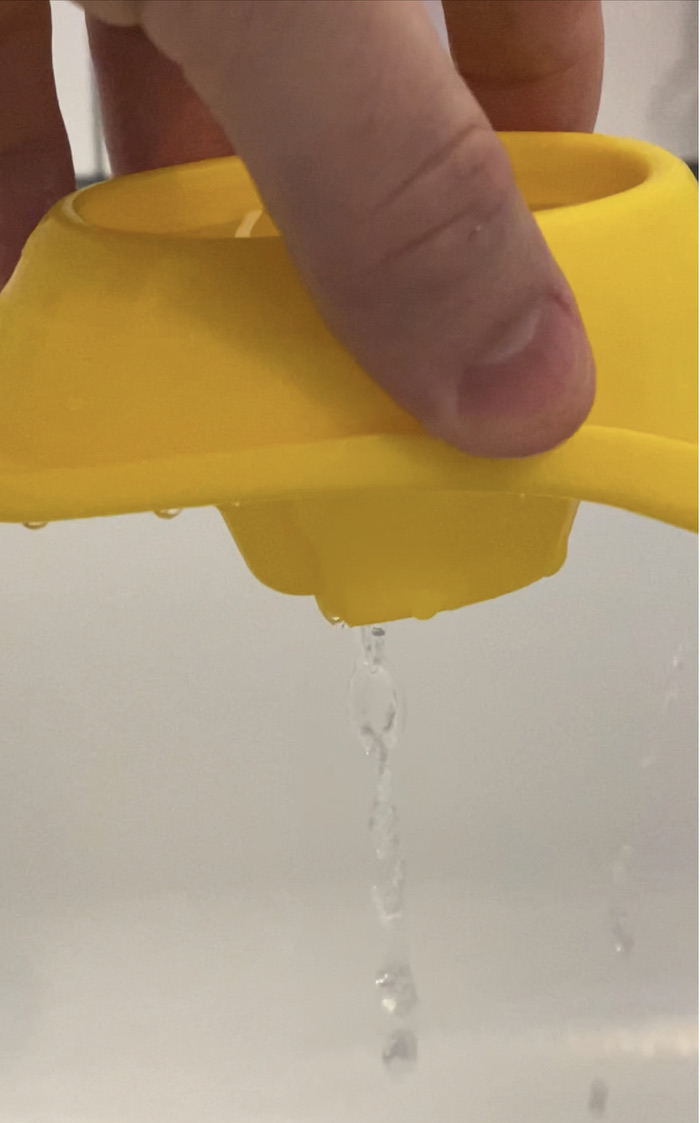
I have a set of bath toys for my kids which include little toy boats with some holes poked in the top. I observed a neat effect with the boat with 2 holes when held upside down so the water drains through them.
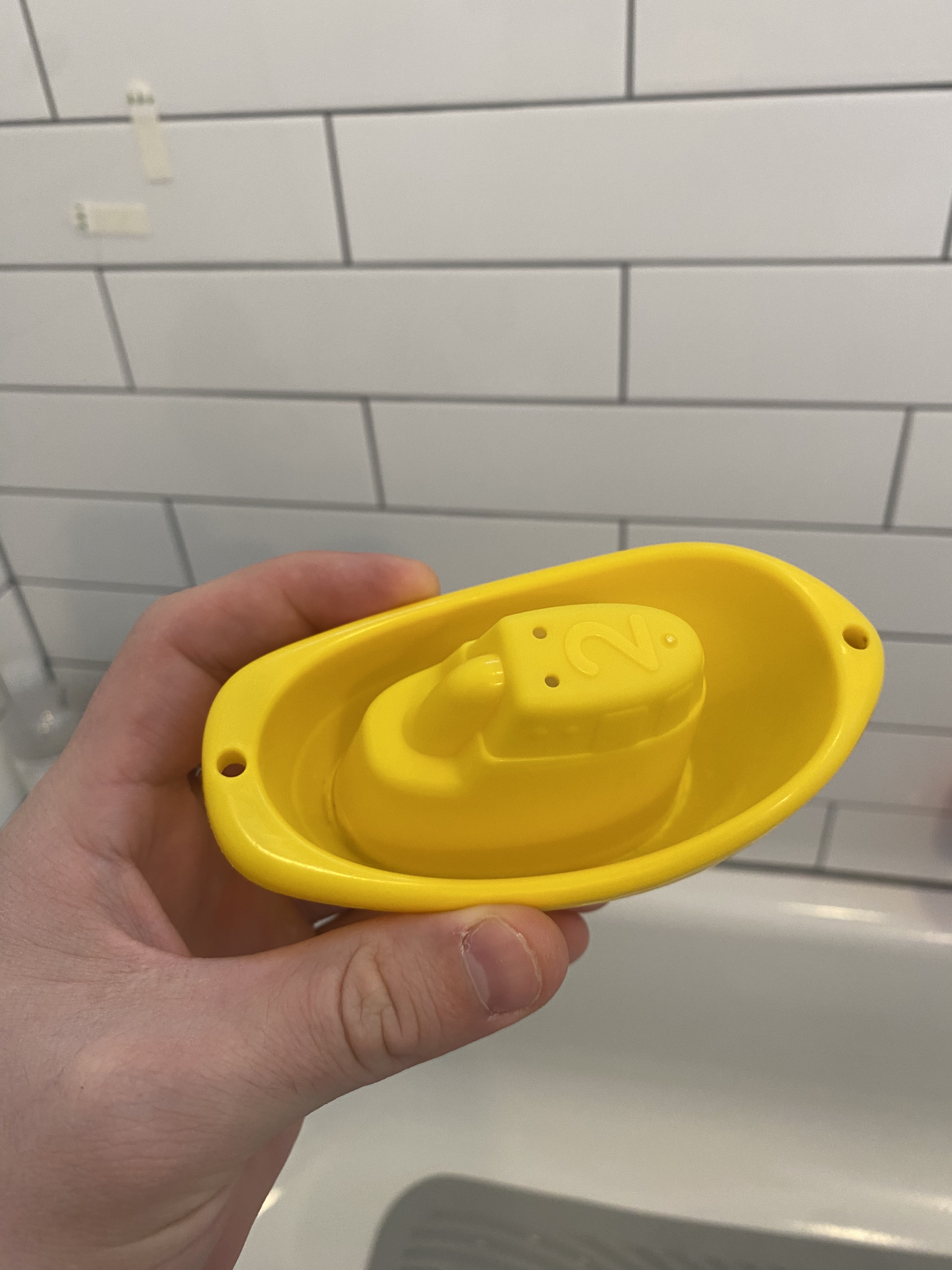
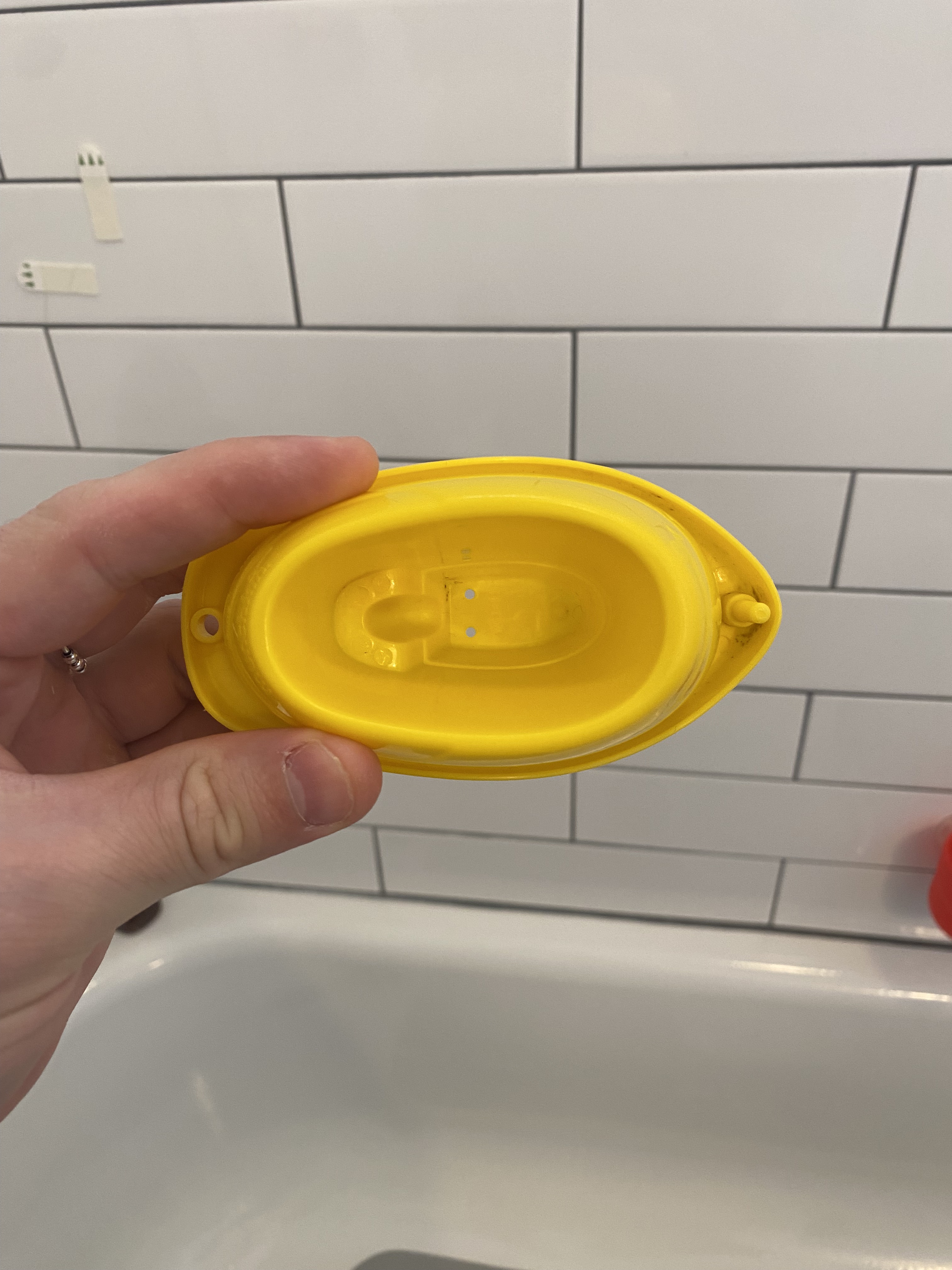
Normally, the water drains straight through the holes as you would expect.
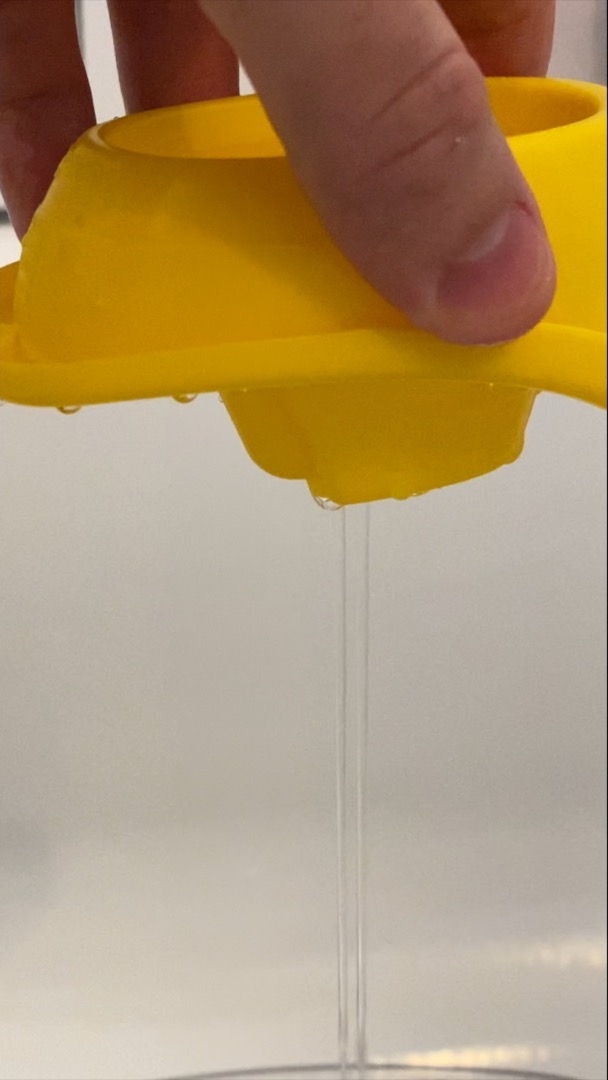
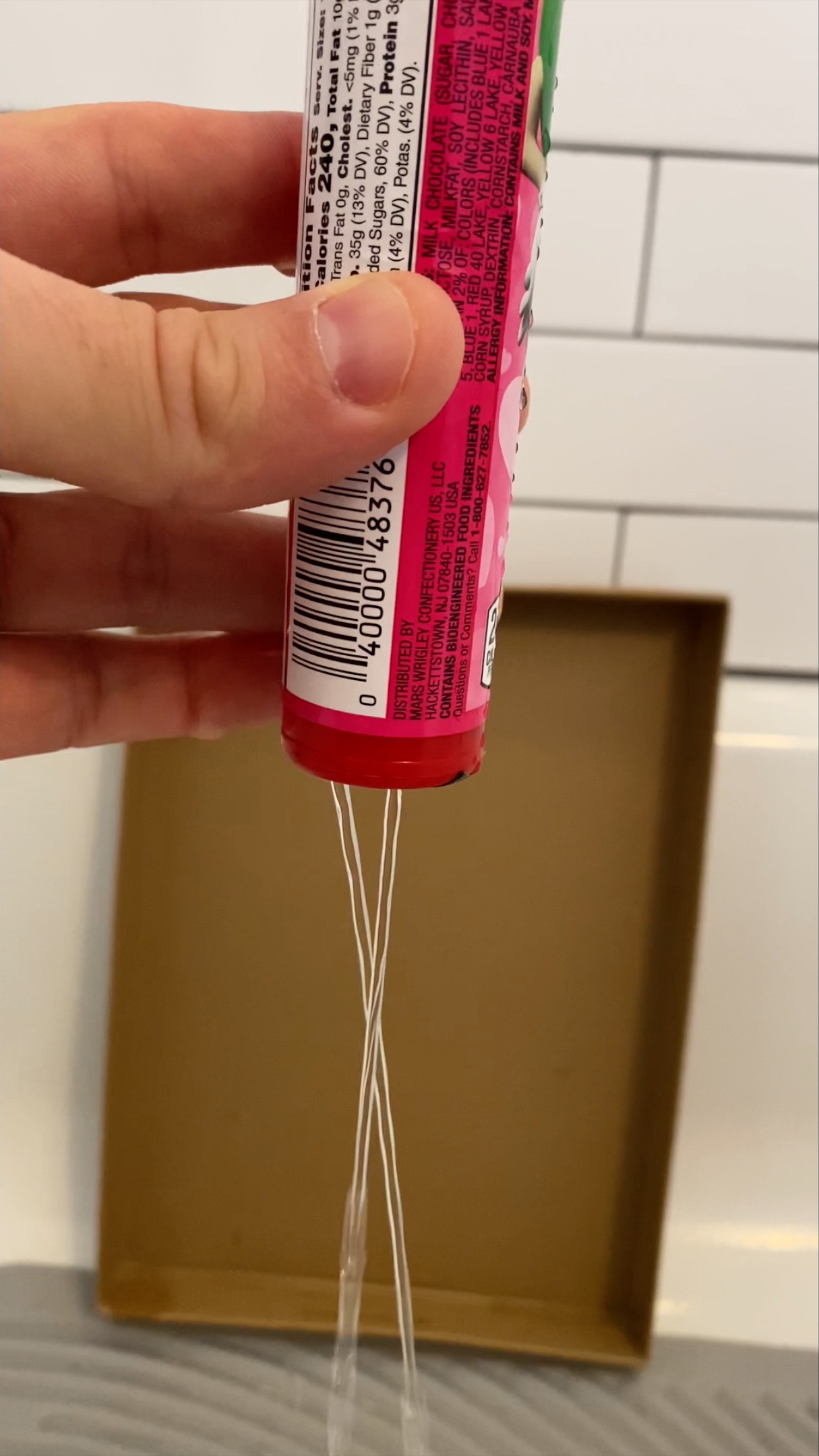
However, under the right conditions the two streams will be attracted to each other, and form an interesting chain-like effect.
This strikes me as connected to this Steve Mould video about a similar effect, although in his testing he was working with a single, non-circular aperture rather than multiple circular holes.
The effect seems to be quite sensitive to pressure and flow rate, and tends to break up after a short while. I captured the below video demonstrating this effect, as well as some great slow motion footage of the chain breaking up and the streams reverting to their separate flows.
Additionally, the effect is heavily dependent on the surface of the material between the holes being wet, which provides some additional surface tension to guide the streams together. If the chain effect stops, you can actually restart it by dipping the surface in water, as demonstrated below.
I now wanted to attempt to reproduce the effect, to investigate whether different geometry could improve it. To start, I would replicate the toy as closely as I could to confirm that it worked, then start playing around with hole size and spacing.
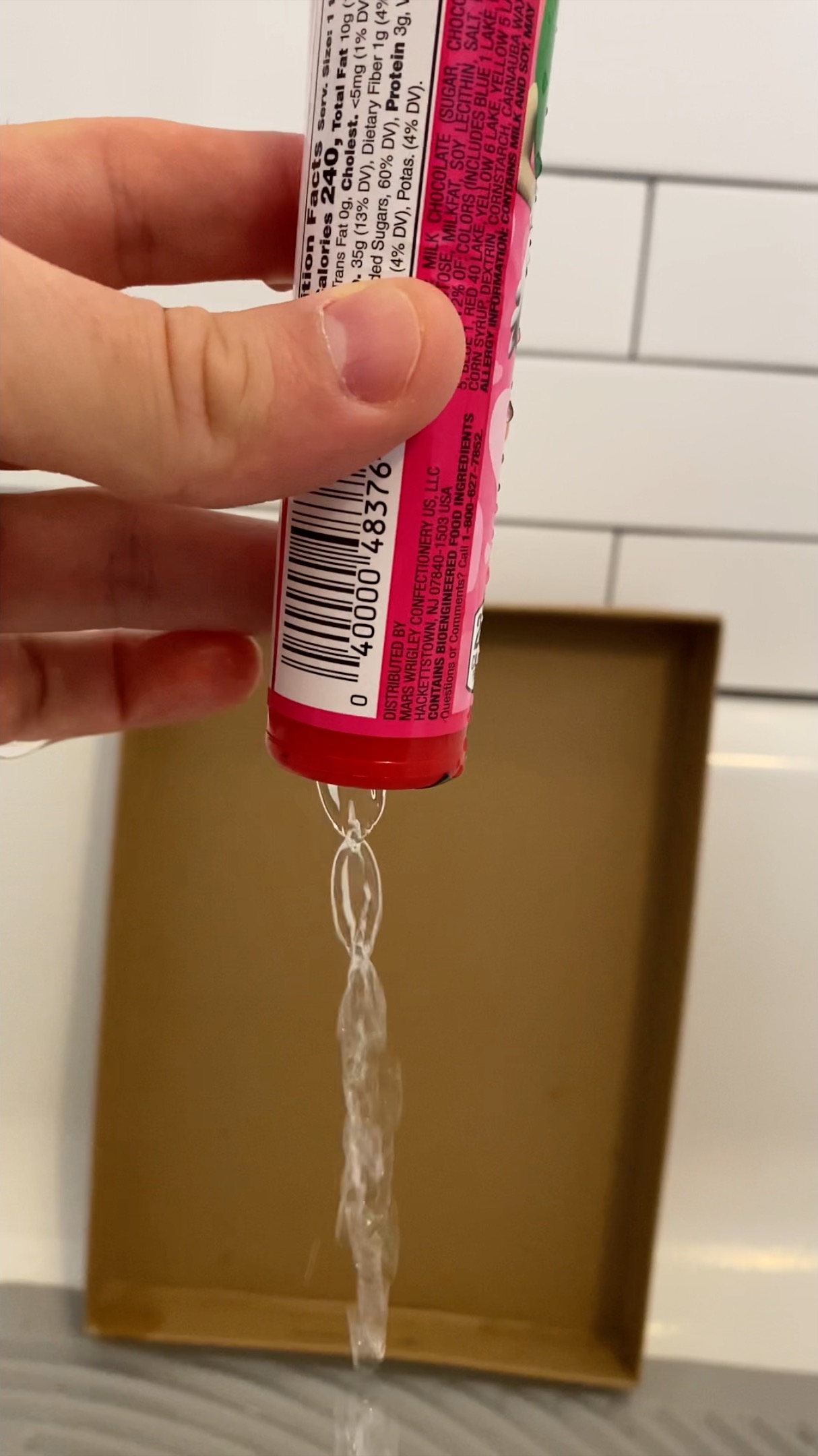
The holes in the boat toy are spaced 0.325″ apart, and are 0.09″ inner diameter. Using a 3/32″ (0.09375″) drill bit, I put two holes in the bottom of a plastic M&M tube. Filling the tube with water, I was able to reproduce the effect.
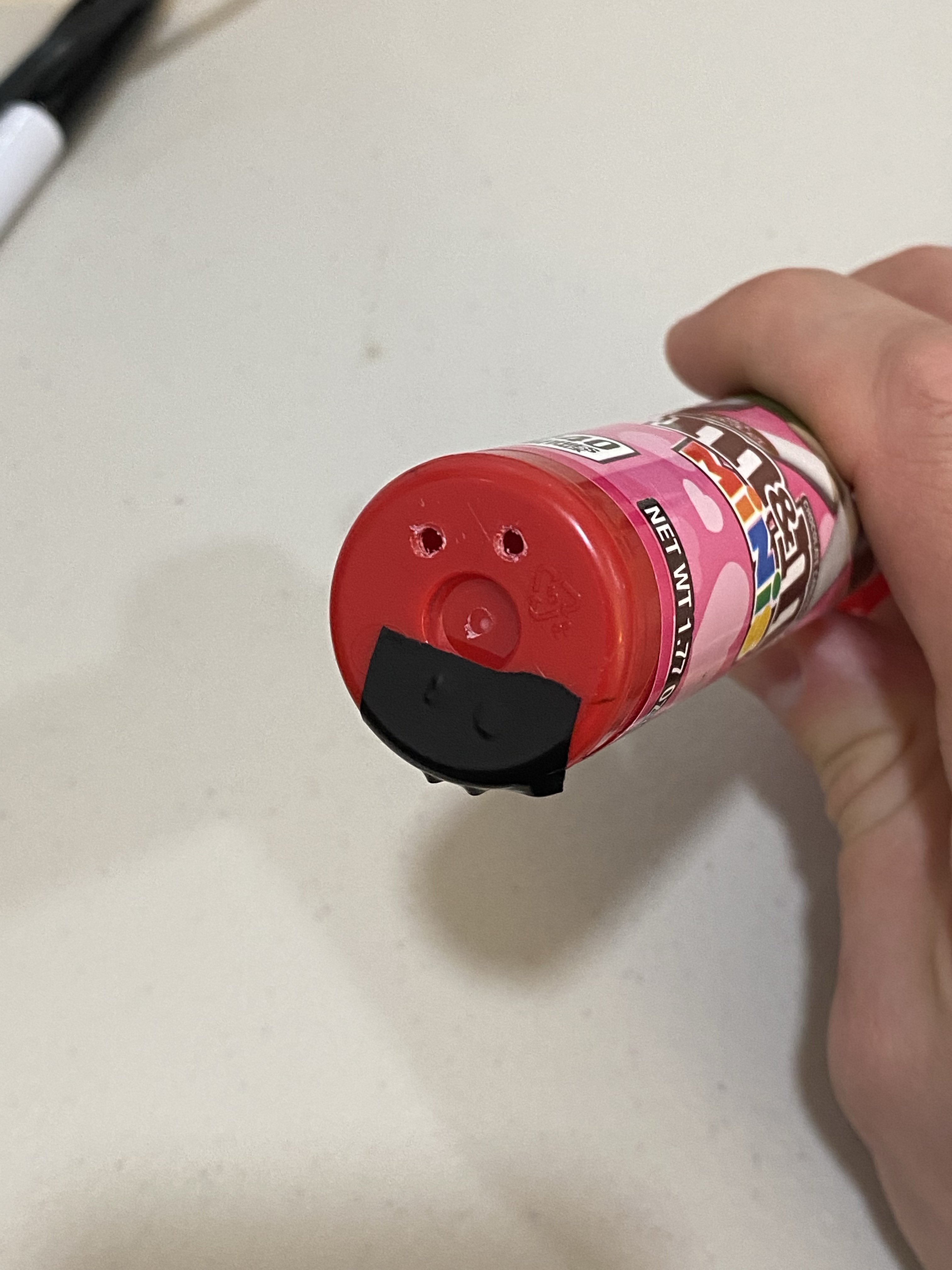
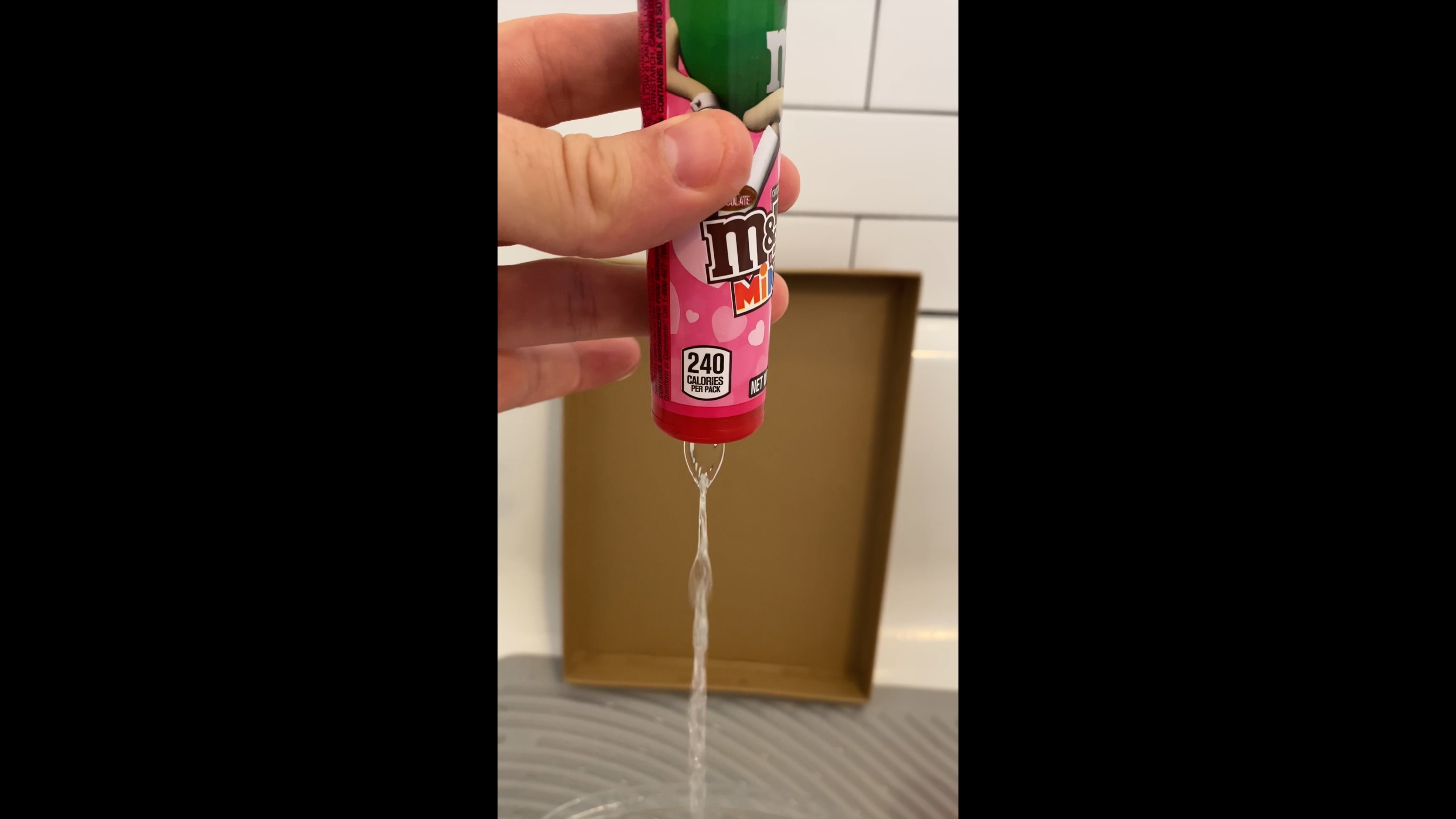
Since the effect seems to require the surface between the holes to be wet to draw the streams together, I next attempted to move the holes closer together. I drilled a new set of holes 0.175″ apart in the same tube, and was again able to reproduce the effect. However, perhaps because the decreased spacing meant the streams didn’t have to move as far to come together, it looked less impressive.0
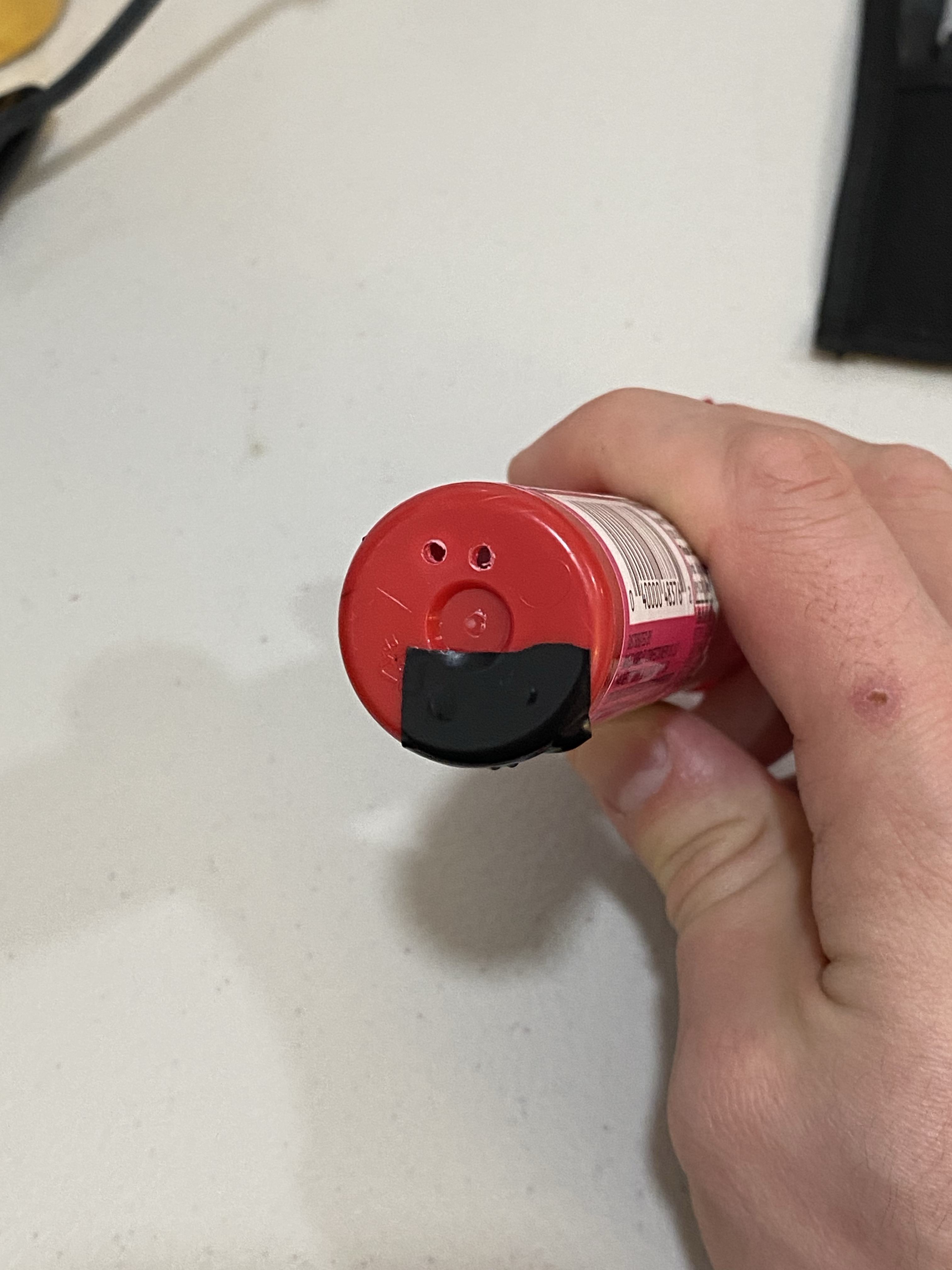
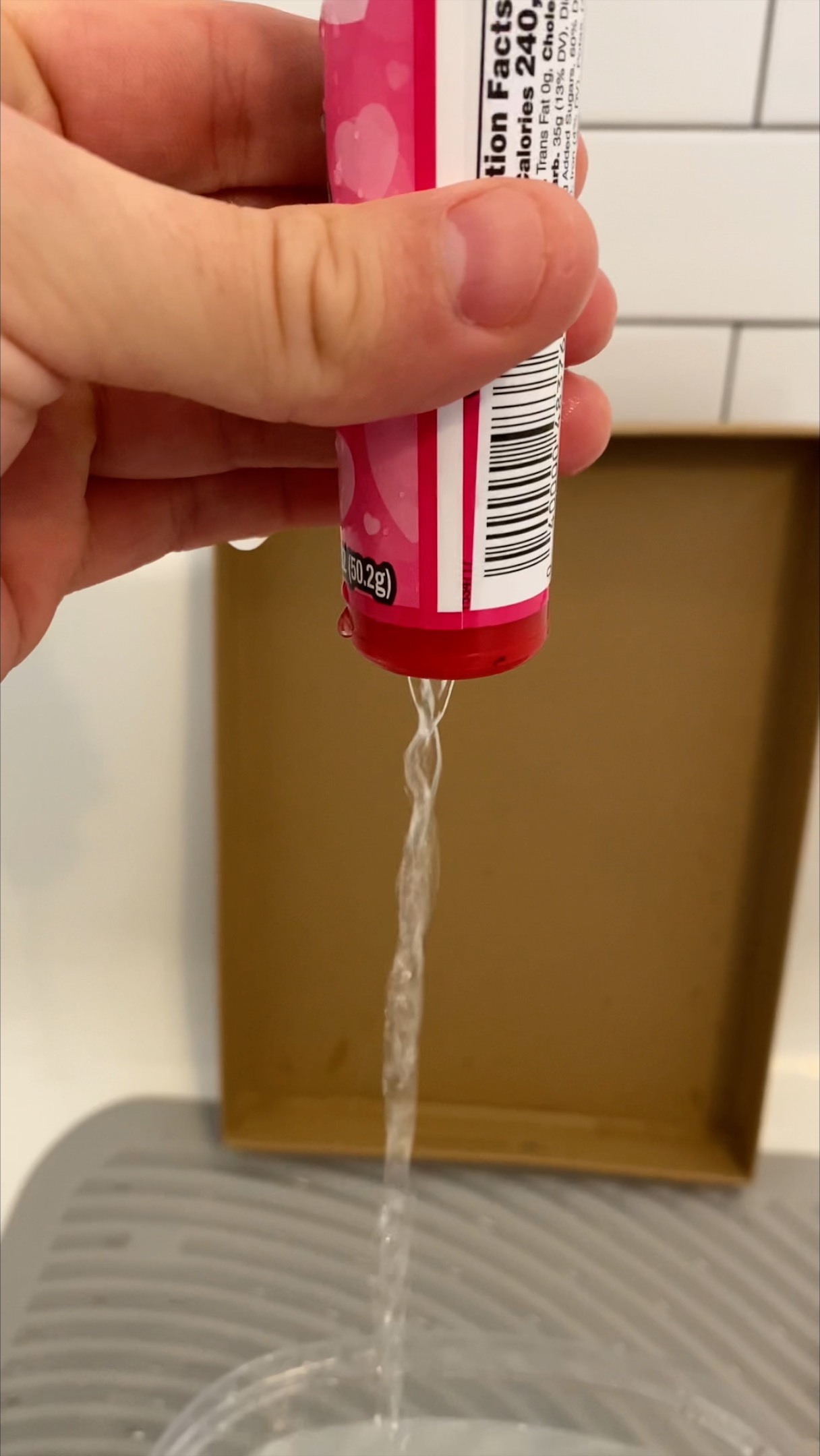
For my next attempt I moved back to the original 0.325″ spacing, but when I drilled the holes I angled the bit so the water streams would be directed towards each other. This did produce a pleasing effect that was longer-lived than the 0.325″ spacing that was drilled straight.
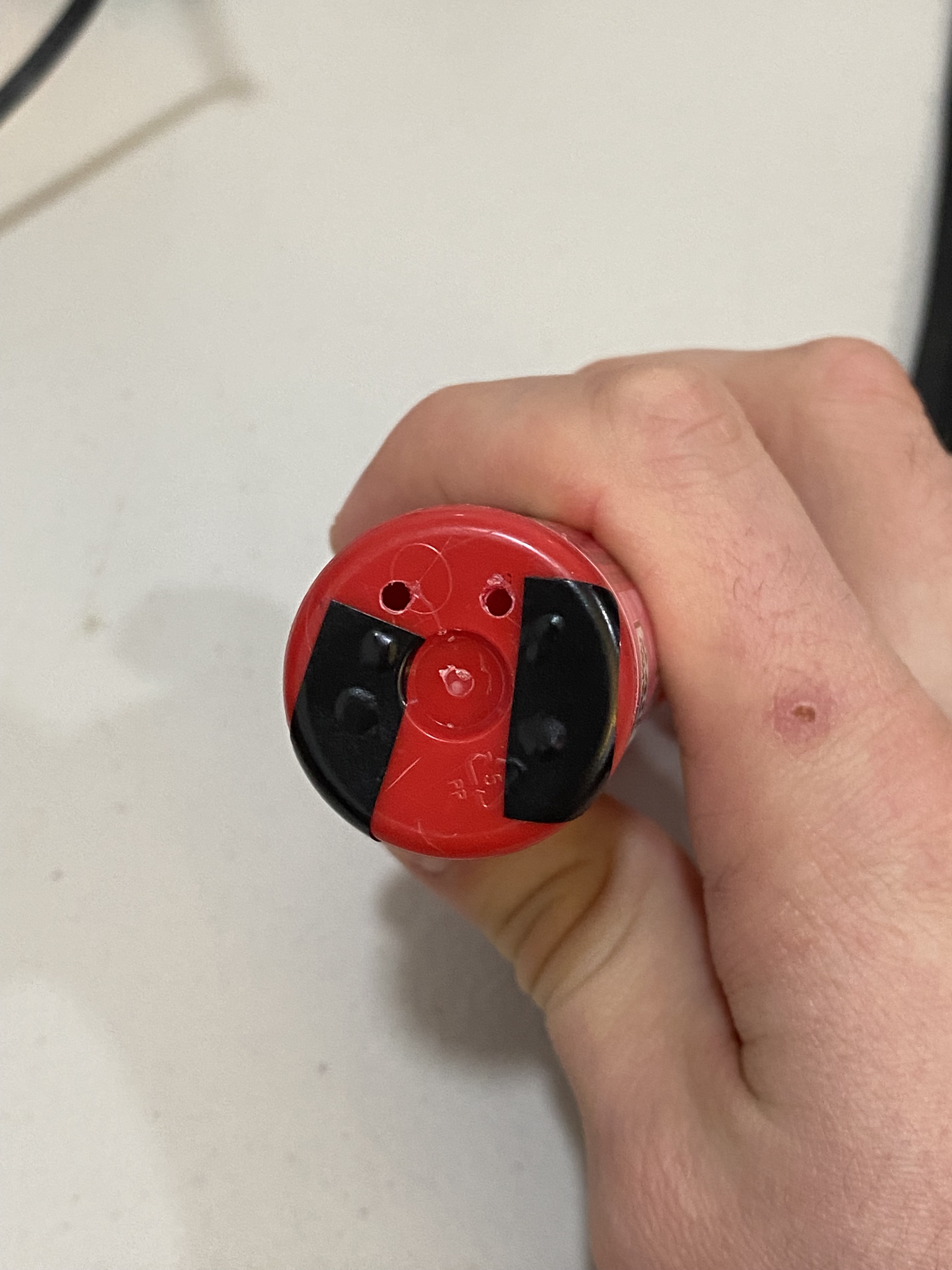
Unfortunately, for all of these cases I found that the variability in the holes was having a major effect on the produced streams, observable in the images below. I am using a twist drill bit in a handheld drill, so I am not able to drill the holes precisely enough to effectively control the streams.
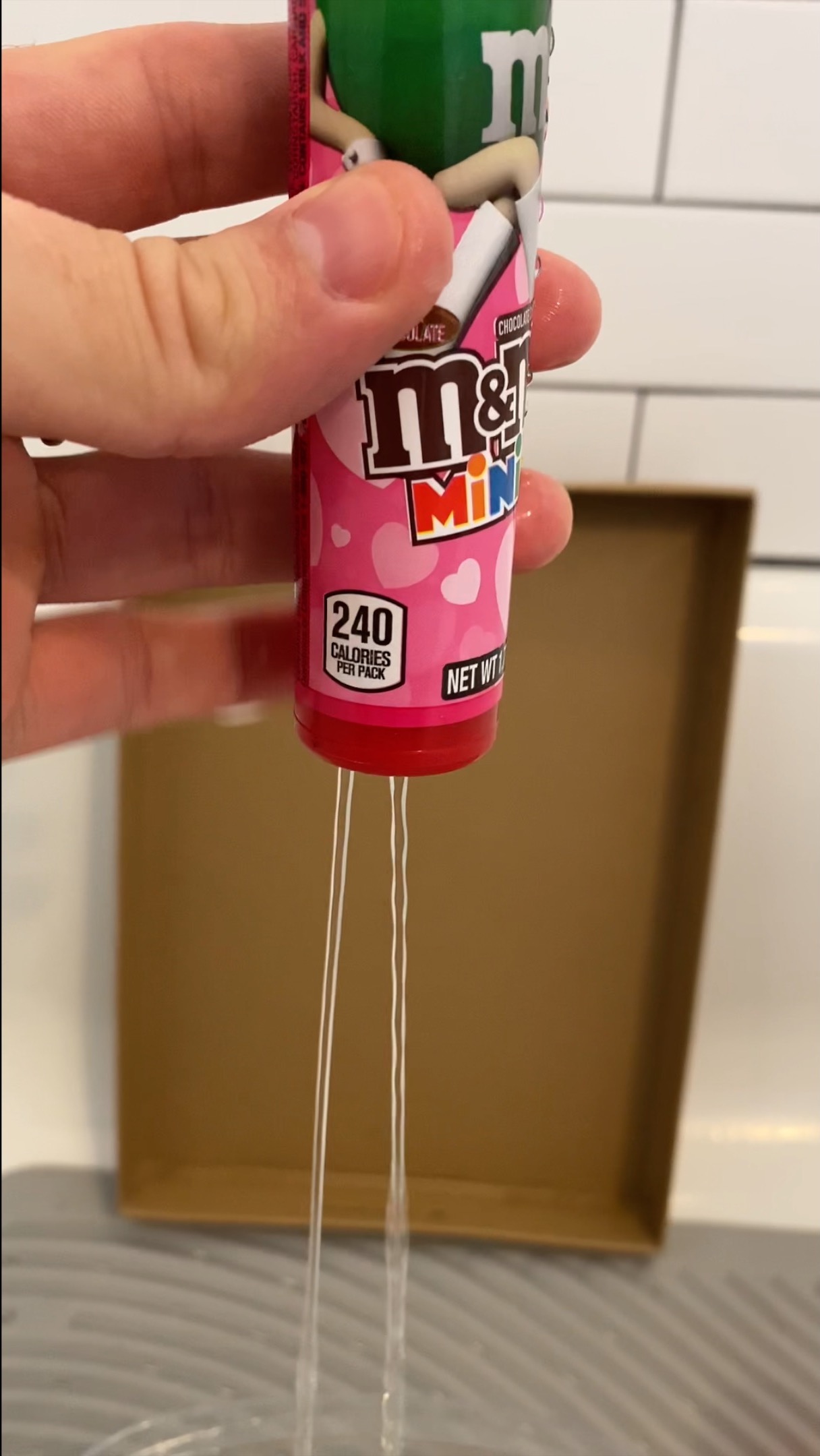
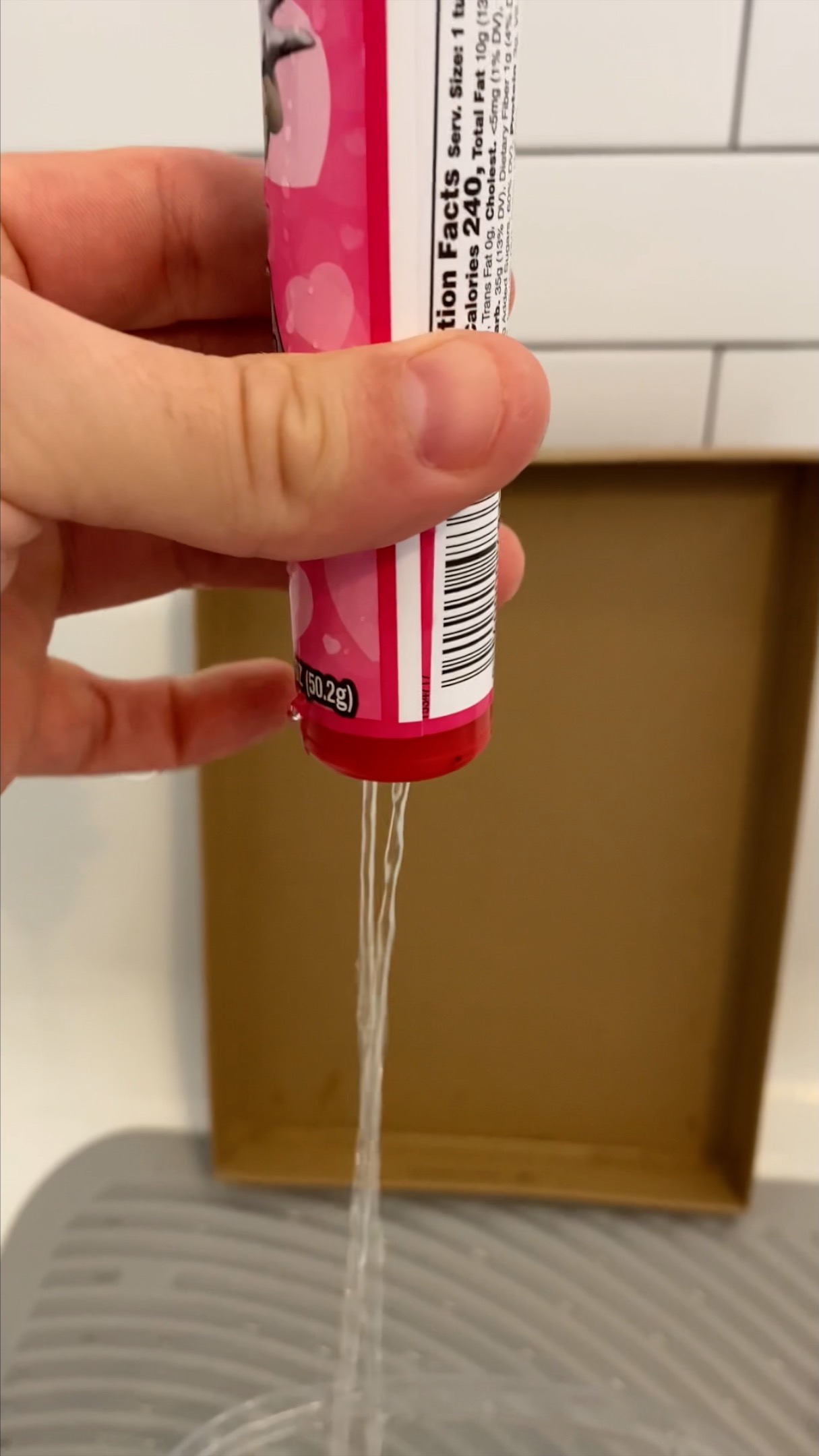
To take this investigation further would require a more precise hole-creation method, probably involving a drill press and a jig for setting the hole alignment. For now, I will have to leave it there.